Chapter Houses
The physical chapter houses that fraternities and sororities occupy have long served as one of the most defining and enduring symbols of Greek life at Kansas State University. What began as modest residences have gradually evolved into the large homes that stand today. The transformation of the physical spaces mirrors the shift from small student societies to permanent, well-established organizations. These houses that were often built through collaborative efforts of alumni and active members, have provided affordable housing for students at Kansas State for over a century. These homes serve as more than simply a place to live, they function as the center for each fraternity and sorority, shaping both chapter identity and the overall Greek life experience at Kansas State.
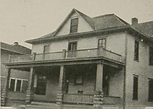
Photo from 1916 Royal Purple of the original Pi Beta Phi house

The first Pi Kappa Alpha house courtesy of the 1914 Royal Purple

Photo of current Pi Beta Phi house courtesy of Baker McMillan Architects
.webp)
Photo of the current Pi Kappa Alpha house from the Alpha Omega Pike Chapter House website
Housing Crisis on Campus Solved by Greek Life
When fraternities and sororities first came to K-State's campus, they were met with some scrutiny. However, people soon recognized that Greek organizations could help address a growing need: the lack of student housing. By the early 1900's enrollment at K.S.A.C. was rising steadily, and there became a sense of urgency surrounding the question of where students would live. The establishment of fraternity and sorority houses offered a practical solution, providing group living arrangements at a time when the campus could not keep up with the rising enrollment.
The campus faced yet another major housing crisis following the end of World War II. There was a great influx of both veteran and non-veteran studens arriving to campus seeking living arrangements. According to James Carey's book titled Kansas State University: The Quest for Identity, "It was the most acute housing shortage in Kansas State's history." This shortage was even more difficult as there was a great scarcity of building materials in the postwar years. Once again, fraternity and sorority houses were able to assist with the need for housing by offering addition living spaces for students. Following the installation of the eighth sorority on campus in 1947, Alpha Chi Omega, the Dean of Women Hellen Moore emphasized the essential role of Greek houses stating "Until the state is able and willing to provide residence halls for its students, sororities, and fraternities make a valuable contribution through providing good housing."
The housing crisis in 1946 became so dire that fraternity houses began being used as extra housing for women on campus. The fraternity houses were turned into "college annexes" to accommodate female students in search of living arrangements. Annex 1 was in the Sigma Alpha Epsilon house, Annex II was in the Sigma Nu house, Annex III was in the Delta Tau Delta House and Annex IV was in the Sigma Phi Epsilon fraternity house. These annex's would host social events in the fraternity homes during the years that they occupied them.

Photo of freshman girls leaving their dormitory for rush parties courtesy of the 1954 Manhattan Memorandum.

1946 Royal Purple photo of all of the fraternity houses on campus

Photo of the women of Annex IV who lived in the Sigma Phi Epsilon house, courtesy of the 1946 Royal Purple


Location Changes of Houses
As one might expect, over the century that Greek houses have been part of Kansas State, the physical locations of these homes have changed many times. New chapter houses have been constructed, and fraternities and sororities have frequently purchased and moved into homes previously occupied by other chapters. The top photo is a map of the sorority houses on campus from the 1958 Panhellenic Handbook titled It's All Greek to Me. Some of the houses occupied by sororities on this map are now the homes of current fraternities. The bottom photo is a map off the fraternity houses on campus courtesy of the 1955 K-State Fraternities magazine.
I'm a paragraph. Click here to add your own text and edit me. It's easy.
Greek Houses as Hospitals During Influenza Epedimic
Between 1918 and 1920, waves of Influenza swept through the university and the surrounding community. To care for the large numbers of affected students and community members, the local YMCA and several fraternity houses were converted into temporary hospitals. Pictured here, courtesy of the Delta Sigma Phi Facebook page, is the former YMCA building, now the home of Delta Sigma Phi, which served as an emergency medical facility during the pandemic.


Fraternity Houses as Hospitals During Influenza Pandemic
Between 1918 and 1920, waves of influenza swept through the university and the surrounding community. To care for the large number of affected students and community members, the local YMCA and several fraternity houses were converted into temporary hospitals. Pictured here, courtesy of the Delta Sigma Phi Facebook Page, is the former YMCA building, now the home of Delta Sigma Phi, which served as an emergency medical facility during the pandemic.
Affordability of Greek Housing

Not only has Greek housing provided an important solution during periods of housing shortages, it has also offered a generally affordable living option for students. At Kansas State University, Greek organizations have long provided chapter housing that includes both accommodations and meal services, often at costs comparable to or lower than traditional residence halls. According to the recent financial transparency data from the K-State Fraternity and Sorority Life office, annual in-house living costs for Greek members are generally equal to or less than those of university dormitories.
Photo from the 1950 Kansas State Fraternities magazine, highlighting the comparable costs of living in a fraternity house as opposed to other housing options

Greek Ghosts
A fun piece about the history of Greek houses appears in the 1986 K-State Greek article titled "Greek Ghosts". This article talks about ghost stories tied to fraternity and sorority houses across campus. Many of these stories come from long histories of the buildings, some of which once served as hospitals, boarding houses, or the previous homes of other chapters. According to this article, five houses have ghosts, Lambda Chi Alpha, Delta Sigma Phi, Phi Gamma Delta, Kappa Sigma, and Alpha Delta Pi. The changing uses of these homes helped inspire stories of strange noises and unexplained sightings, making ghosts stories a lighthearted and lasting part of the history of K-State Greek houses.